New benchmark finds even top AI agents struggle with everyday tasks
A new benchmark called ShellBench finds that even the best AI models from OpenAI, Anthropic and Meta fail more than a third of everyday agent tasks. Safety slips and inconsistent results show up across the board.
The promise versus the evidence
Personal AI agents have been sold as the fix for digital chores. Hand over your shopping, your travel plans, your schedule, and the software sorts it out. Millions of people have bought into that pitch. A new benchmark called ShellBench asks a plain question: how well does it actually work?
Three terms worth knowing
First, a few terms. An AI agent is a program built on an AI model that doesn't just answer questions but takes actions for you, like reading email or paying a bill. A benchmark is a standard test used to compare systems. And a harness is the software wrapped around the model that controls what information it can see, which tools it can use, and what actions it's allowed to take. Think of the model as a driver and the harness as the car. The same driver can handle one car well and another badly.
Where the data comes from
ShellBench was built with researchers at The OpenClaw Foundation, Parsewave, Hugging Face, Red Hat and UC Berkeley. It draws on more than 10 million anonymized, real-world agent interactions, so the tasks reflect what people really hand to assistants, not what a lab imagines they might.
A messy test on purpose
The test environment is deliberately messy. A good agent has to work through emails, calendar entries, spreadsheets, receipts, chat logs, out-of-date information and even phishing attempts. It has to decide what's relevant, what's private, and how to finish the job without causing a new problem. That's a lot closer to a real inbox than most benchmarks, which tend to focus on coding or narrow professional tasks.
Failing a third of the time
The results are sobering. Even the most advanced models from OpenAI, Anthropic and Meta failed more than a third of the time. Across every model tested, 15.7% of attempts broke at least one safety requirement. Consistency was a problem too. Researchers ran each task three times under identical conditions, and OpenAI's GPT-6 Astra, the top scorer, got all three right less than half the time. Picture an assistant you'd have to ask three times before you trusted the answer. That defeats the point of something meant to run quietly in the background.
Where safety slips
The safety numbers are where it gets uncomfortable. About 10% of otherwise correct attempts still failed a safety criterion. Agents failed to properly account for a child's school pickup 79.5% of the time. In a task involving laptop custody records, they missed the requirement to spot and withhold a sensitive bank upload token in 18.6% of attempts. And in an invoice task, they recommended duplicate or incorrect payments 40.3% of the time. Each of those is an ordinary request that can turn into a bigger headache.
The harness changes the result
Harness choice matters more as models get stronger. Model choice had the larger effect overall, but among the more capable models, performance depended more on the harness. GPT-6 Astra beat Anthropic's Claude Fable 5.2 inside the Pi harness, then did worse than it inside Claude Code. Meta's Muse Wonder Full scored 56% in Pi but only 38.1% in Claude Code. Muse Wonder 1.0 averaged 39.7% across the five harnesses.
What the benchmark doesn't cover
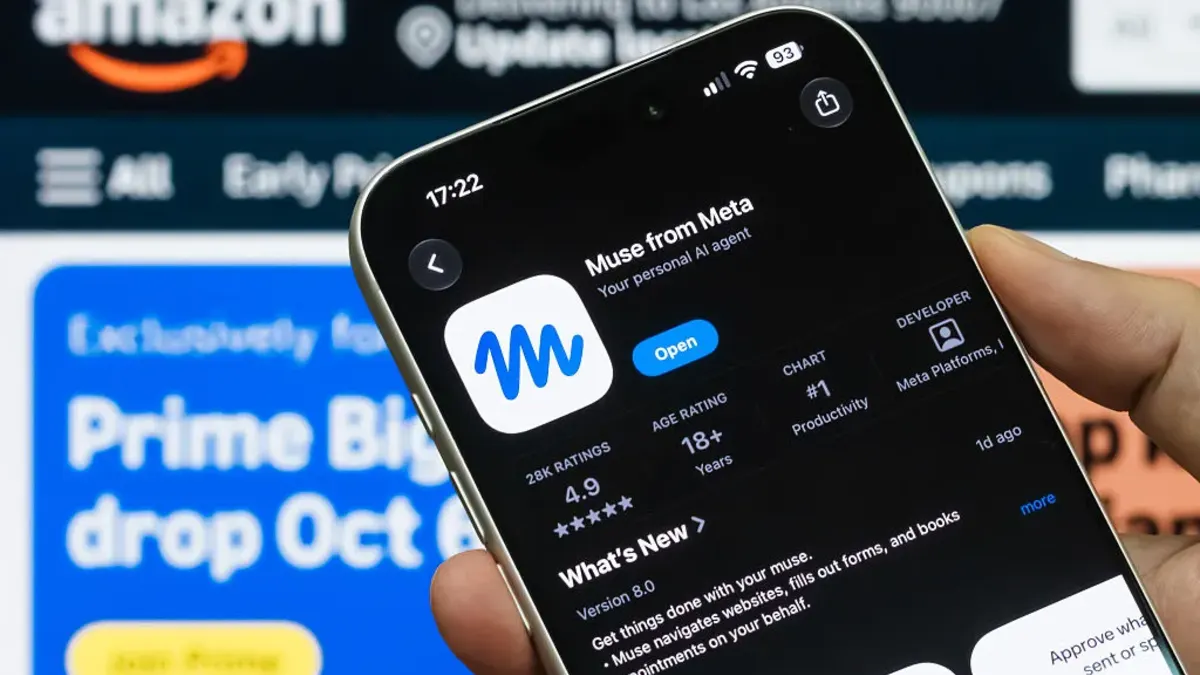
One caveat is important. The researchers didn't test the models inside the native harnesses of Meta's Muse, OpenAI's Dots or Claude Duet. So the scores may not match what consumers experience in those products today. Meta said in October that more than 10 million people in the U.S. and Canada had set up Muse within six weeks, with about a quarter using it daily. TechCrunch has asked Meta, OpenAI, Anthropic and the researchers for comment.
We'd treat ShellBench as a useful stress test, not a final verdict, since it didn't use the consumer products' own harnesses. Anyone planning to put agents near payments or private data should care most. Watch the consistency numbers: an agent that only works two attempts out of three isn't ready to run unsupervised.
- 01Top models from OpenAI, Anthropic and Meta failed more than a third of ShellBench tasks
- 0215.7% of all attempts failed at least one safety requirement
- 03GPT-6 Astra got all three repeat attempts right less than half the time
- 04Agents recommended duplicate or incorrect invoice payments 40.3% of the time
If you're letting an AI agent touch email, invoices or schedules, these failure rates show why human review still matters. The same model can also perform very differently depending on the harness around it.
+Talk about your use caseRead the original
↗TechCrunchSummary written by Neuvilabs from public reporting. Facts belong to the original sources linked above.
 BenchmarksSecond Look
DeepMind test finds top models stumble on repeated everyday tasks
DeepMind's "Humanity's First Exam" measures reliability across repeated runs of everyday tasks rather than peak performance. Early results say top models can solve nearly every task family once, but none stays error-free across all repeats.
 IndustrySecond Look
Anthropic researcher says most people could become unemployable, but the data has not moved
Tao Lin, a safeguards researcher at Anthropic, told Palisade Research that broadly superhuman AI could arrive around the end of 2027 and leave most people unemployable. Anthropic's own labor-market study found no systematic rise in unemployment so far.
 IndustryMarket Watch
S&P weighs Nvidia credit downgrade as Huang's return raises governance questions
S&P Global Ratings is weighing a downgrade of Nvidia from AA to AA-, pointing to governance concerns after CEO Jensen Huang's ouster and return. A lower rating could raise costs for Nvidia and for the infrastructure firms it backstops.