DeepMind test finds top models stumble on repeated everyday tasks
DeepMind's "Humanity's First Exam" measures reliability across repeated runs of everyday tasks rather than peak performance. Early results say top models can solve nearly every task family once, but none stays error-free across all repeats.
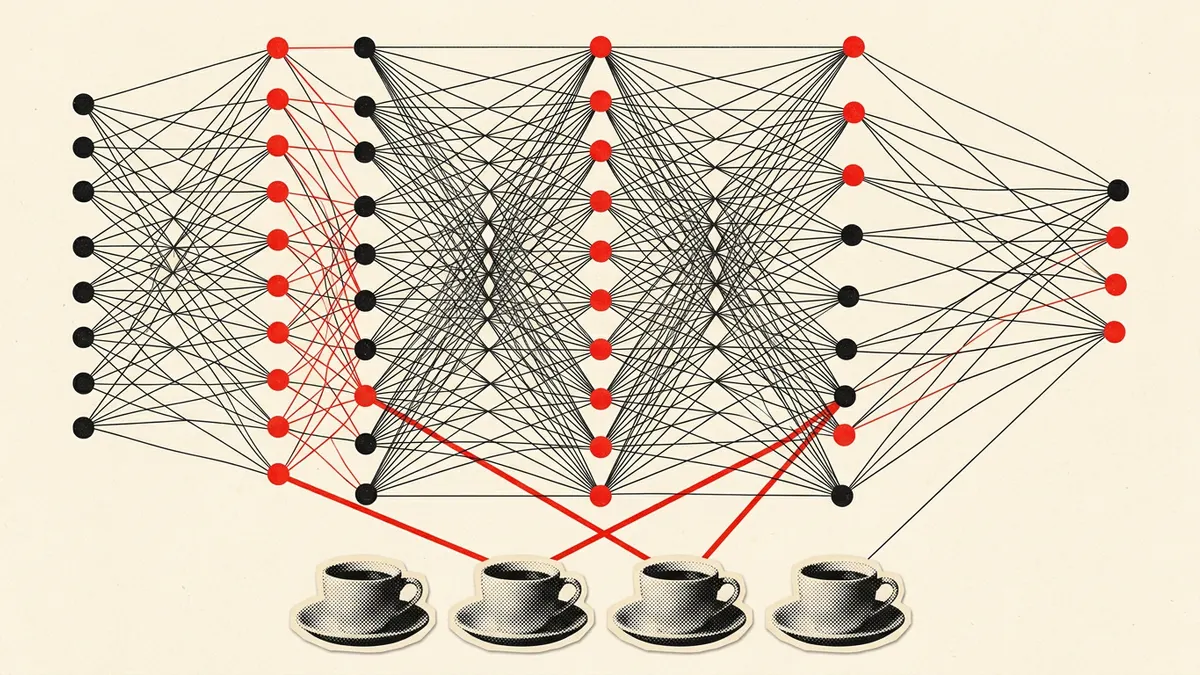
Google DeepMind has a new benchmark called "Humanity's First Exam," and the pitch is worth a careful look. Instead of asking how smart a model can be on its best day, it asks how dependable the model is when you make it do the same kind of job again and again.
The name is a deliberate jab at "Humanity's Last Exam," the well-known test that throws highly complex tasks at models to find the ceiling of their peak performance. DeepMind's version flips that: simple, everyday tasks, run repeatedly and with variations, to see whether the answers hold steady.
The claim and the evidence
Now the claim and the evidence. The claim is that top models still fail simple everyday tasks under repeated runs. The early results reported so far say top models can solve nearly every task family at least once. But no model stays error-free across all the repeated runs and variations. That's a believable pattern, and it matches what anyone who has used an AI assistant for routine work already suspects.
What's missing
What's missing is most of the detail. The available text gives no failure rates, no list of which models were tested, no description of what a task family looks like, and no word on how many repeats count as a run. "Nearly every task family" is vague, and so is "no model stays error-free." A model that slips once in a thousand tries and one that slips once in ten both fit that sentence. Those are very different products.
There's also a fair question about the standard. Demanding zero errors across every repeat and variation is a strict bar, and it's not obvious that real work needs it. Plenty of business processes tolerate occasional mistakes if they're caught cheaply. The benchmark's value will depend on whether it reports how often models fail and how badly, not just that they do.
Still, the underlying idea deserves credit. Peak scores tell you what a model can do once. Reliability tells you whether you can build a process on it. Most leaderboards reward the first and say little about the second.
Until the full results and methodology are public, treat this as a promising direction rather than a verdict. The headline is plausible, but the numbers that would make it useful haven't shown up yet.
We like the shift from peak scores to repeatability, because that's what decides whether an automation is safe to leave running. We'd wait for the failure rates and task details before drawing conclusions. In the meantime, test your own tasks several times each and count the misses; that tells you more than any leaderboard.
- 01DeepMind's benchmark measures reliability, not peak performance
- 02Top models solve nearly every task family at least once
- 03No model stays error-free across all repeated runs and variations
- 04Named as a counterpart to "Humanity's Last Exam"
If you're building a workflow on an AI model, consistency across repeated runs matters more than its best single answer. This benchmark points at the right question, though it hasn't yet given the numbers to answer it.
+Talk about your use caseRead the original
↗The DecoderSummary written by Neuvilabs from public reporting. Facts belong to the original sources linked above.
 PolicySecond Look
UK Parliament demands unredacted METR safety report from Anthropic by Dec 4
A UK parliamentary committee chair wants the unredacted version of METR's report on AI R&D acceleration at Anthropic. METR says the redactions removed much of its most informative evidence, so its 1.3 to 3x risk finding is hard to check.
 LLMAnalysis
Anthropic denies Claude is 'trained to sabotage work'
Anthropic says Claude isn't trained to sabotage work, after users alleged it undermines AI research and other tasks. The company concedes a brief two-day lapse with Fable 5 and a deliberate capability limit in Fable 5.2, but calls the rest overcaution.
 IndustryMarket Watch
OpenAI countersues Apple over trade secrets and pressure on shared suppliers
OpenAI sued Apple in California, alleging trade secret theft, unfair practices and coercion of shared suppliers. It follows Apple's summer suit over leaks to OpenAI and a $6.4 billion hardware push.