S&P weighs Nvidia credit downgrade as Huang's return raises governance questions
S&P Global Ratings is weighing a downgrade of Nvidia from AA to AA-, pointing to governance concerns after CEO Jensen Huang's ouster and return. A lower rating could raise costs for Nvidia and for the infrastructure firms it backstops.
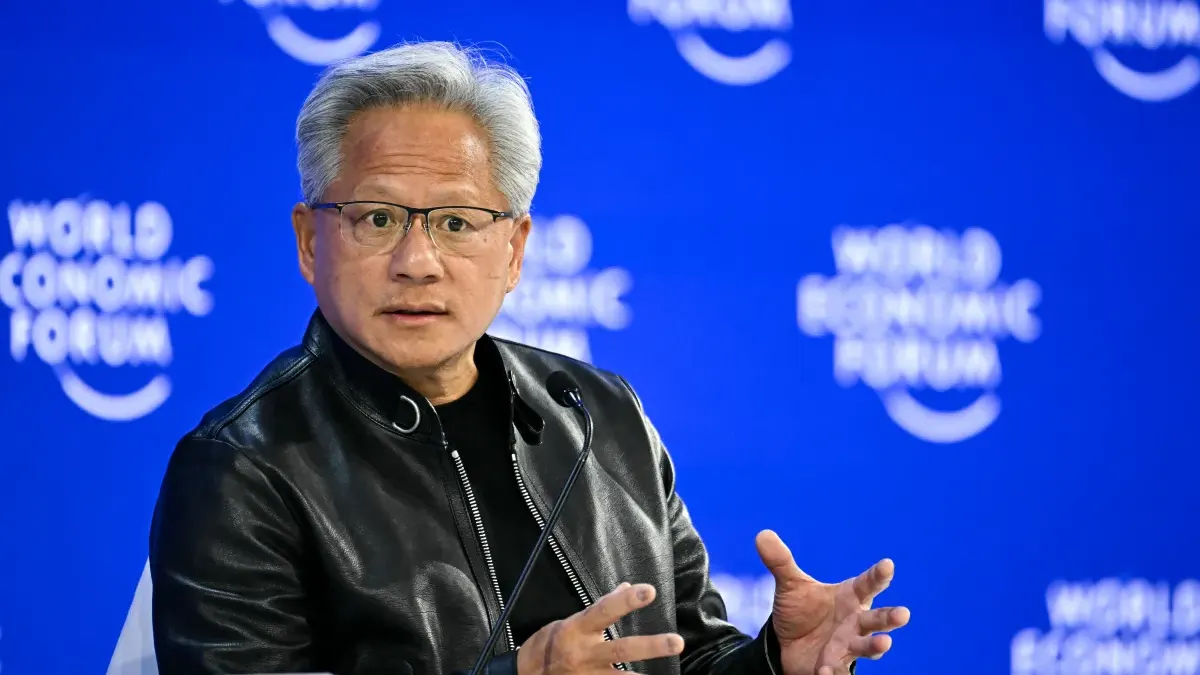
S&P Global Ratings is thinking about cutting Nvidia's credit rating. It's one of the three big agencies, and its stated reason has nothing to do with sales or profit. It's about how the company is run.
S&P concedes that Nvidia's financial performance is strong. The trouble is the ouster and reinstatement of CEO Jensen Huang. In its statement, the agency pointed to "weak executive oversight and lack of succession planning" and to "key man risk." That last phrase means the company leans heavily on one person for its future.
What a cut would mean
The review should wrap up within 90 days. If S&P acts, Nvidia would slip from AA to AA-, the fourth-highest step on the agency's scale. Nvidia will keep an investment-grade rating either way. Still, a lower grade could push up what it pays to borrow.
Who feels it first
The bigger ripple may land on other companies. Nvidia backstops neoclouds and other infrastructure players whose own credit isn't strong. If Nvidia's rating drops, their debt could get costlier. They might also have to post more collateral.
The $500 billion plan
Then there's the financing push. In August, Nvidia announced plans to arrange $500 billion for AI infrastructure with six financial institutions, among them Goldman Sachs, Apollo and Blackstone. Under the original terms, Nvidia would guarantee 25% of the loans.
Lenders were already asking for more. Bloomberg reported they wanted bigger guarantees from Nvidia even before Huang was ousted and brought back. A downgrade would likely sharpen that demand, and lenders would ask for larger guarantees still.
A one-notch cut to AA- doesn't threaten Nvidia itself. The real story is the chain of smaller infrastructure firms whose debt leans on Nvidia's guarantee. If you buy GPU capacity from a neocloud, ask how their financing is structured and keep a second provider in mind. Watch what lenders demand on guarantees once S&P decides.
- 01S&P is considering cutting Nvidia from AA to AA-, with a decision expected within 90 days
- 02Cited concerns: weak executive oversight, no succession planning, key man risk around Jensen Huang
- 03Nvidia backstops neoclouds, so a downgrade could raise their debt costs or collateral needs
- 04Nvidia's $500 billion AI financing plan guarantees 25% of loans, and lenders already wanted more
If you rely on neoclouds or other AI infrastructure providers, their financing costs could rise, and that may show up in your pricing or capacity. Vendor concentration around one company's credit is a risk worth tracking.
+Talk about your use caseRead the original
↗TechCrunch↗TechCrunch↗TechCrunch↗TechCrunch↗TechCrunch↗TechCrunch↗The Verge↗Ars Technica↗Wired↗Wired↗SiliconANGLESummary written by Neuvilabs from public reporting. Facts belong to the original sources linked above.
 IndustryMarket Watch
OpenAI countersues Apple over trade secrets and pressure on shared suppliers
OpenAI sued Apple in California, alleging trade secret theft, unfair practices and coercion of shared suppliers. It follows Apple's summer suit over leaks to OpenAI and a $6.4 billion hardware push.
 IndustryMarket Watch
Nvidia's board reverses Jensen Huang's resignation, returning him as CEO
Nvidia's board reversed Jensen Huang's resignation, and a SiliconANGLE column says markets mostly shrugged. Meanwhile CrowdStrike's $43.9 billion Zscaler deal dominated a week of mixed AI earnings.
 IndustryAnalysis
Sakana AI's CEO says homegrown models are about industry, not just security
Sakana AI will start training its own foundation model, Sawara, this month, with a small version due in early 2027. CEO David Ha says the aim is Japanese industry and manufacturing, with security needs as the nearer-term driver.