Sakana AI's CEO says homegrown models are about industry, not just security
Sakana AI will start training its own foundation model, Sawara, this month, with a small version due in early 2027. CEO David Ha says the aim is Japanese industry and manufacturing, with security needs as the nearer-term driver.
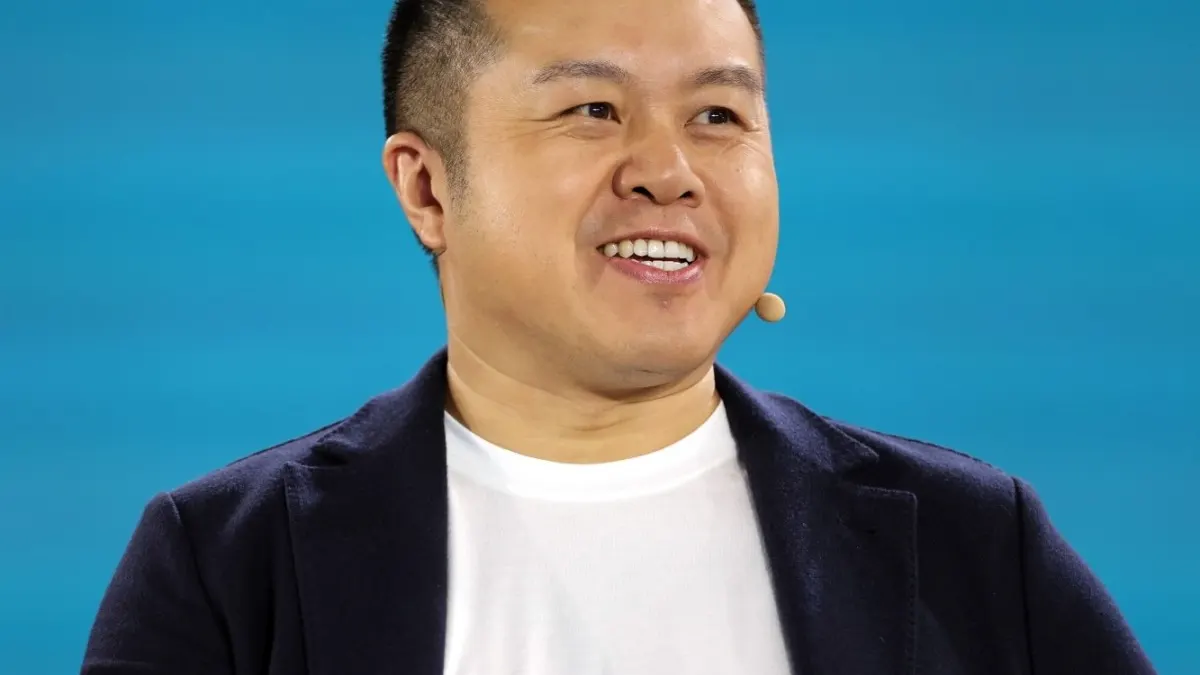
Sakana AI wants to build its own foundation model, and the reasons go well past national security. The Tokyo startup revealed the plan last month. Its CEO, David Ha, has now laid out the thinking to TechCrunch, and the picture is more commercial than the defense headlines suggest.
What Sawara is
The model is called Sawara. Work starts this month. Sakana aims to train and release a smaller model in early 2027, with a larger version after that. Ha says both get trained next year. The small one is meant for on-premises use, which he treats as a hard requirement: "Japan needs on-premises deployment capabilities."
Industry first, security now
"When we started planning for this model, of course, we had physical AI, manufacturing, and industry in mind, and we still do," Ha said. That's the long-term vision. The short-term pull is different. Ha pointed to rising cybersecurity threats and argued that Japan needs domestic options for sensitive uses, particularly if access to foreign models ever becomes limited.
A full stack, almost
Sawara fills the last gap in a stack Sakana has been assembling for about five months. In that time the company launched Fugu, an orchestration system that pulls in other large language models, including ones from U.S. labs, to assemble agents for a given task. It also built Namazu, a Japanese-focused model that fine-tunes open-weight models from Meta and DeepSeek. Ha put it plainly: "The only thing [left] for us to become a full-stack company is the pre-training, Sawara."
The bias argument
Why not just use open-weight models as they come? Ha's answer is bias. "They're usually biased towards their creators," he said, and they "may refuse to answer questions about Japan or Japanese politics." For an enterprise buyer in Japan, that's a practical problem, not an abstract one. Namazu was built to fix it for translation, political questions and agent tasks. Sawara goes a layer deeper, to the pre-training itself.
Lessons from government
Government work has shaped the design. Sakana signed a research contract with Japan's Ministry of Defense in July, looking at how AI can analyze and combine information from several sources. It has also worked with the Ministry of Internal Affairs and Communications on disinformation detection. Government agencies, Ha said, tend to demand more than commercial customers: auditable training data, customizable models, on-premises deployment. "I think similar requirements exist in many governments," he added.
Sovereignty with limits
There's a tension here, and Ha doesn't hide it. A domestic foundation model won't end Japan's reliance on foreign AI. Fugu itself incorporates OpenAI's models. Enterprise customers can mix Fugu, Namazu and overseas models. Ha expects Japan to keep using U.S. systems, and he spoke warmly of Snowflake, Palantir and Datadog. His line is narrower: "for national defense, Japan will want its own systems." Sovereignty here means having an alternative, not cutting ties.
The IPO question
Then there's the IPO chatter. Nikkei and Bloomberg reported earlier this month on a possible listing. Ha called the reported timing and valuation speculative and said Sakana has no near-term plans to go public. He doesn't know when it might. Still, he expects an eventual listing, and in Japan: "We have a gravitational pull to eventually IPO in Japan."
Betting on manufacturers
The growth story he tells is tied to manufacturers rather than to model sales. Sakana wants to help local companies compete globally, and Ha sees the company's expansion following theirs. "We want to go abroad, go international together with manufacturing and industrial sectors." That makes the bet less about winning a benchmark race and more about owning the AI layer inside Japanese industry, with the government as an anchor customer that sets the bar for audit and control.
We think the on-premises small model is the most interesting part. Plenty of companies outside Japan face the same demands for audit and local deployment, so this is worth watching as a template. The risk is execution: pre-training is expensive, and the source gives no details on size, data or funding. We'd wait for the 2027 release before judging it.
- 01Sakana starts work on its Sawara foundation model this month, with a smaller model targeted for early 2027 and a larger one after.
- 02Sawara completes a stack that already includes the Fugu orchestration system and the Namazu Japanese-focused model.
- 03Sakana signed a research contract with Japan's Ministry of Defense in July and has worked with the Ministry of Internal Affairs and Communications on disinformation detection.
- 04Ha says there are no near-term IPO plans, though he expects an eventual listing in Japan.
Buyers in regulated or sensitive sectors increasingly want auditable, customizable models they can run on their own hardware. Vendors that can offer that, alongside foreign models, may win deals that pure API providers can't.
+Talk about your use caseRead the original
↗TechCrunchSummary written by Neuvilabs from public reporting. Facts belong to the original sources linked above.
 PolicySecond Look
UK Parliament demands unredacted METR safety report from Anthropic by Dec 4
A UK parliamentary committee chair wants the unredacted version of METR's report on AI R&D acceleration at Anthropic. METR says the redactions removed much of its most informative evidence, so its 1.3 to 3x risk finding is hard to check.
 LLMAnalysis
Anthropic denies Claude is 'trained to sabotage work'
Anthropic says Claude isn't trained to sabotage work, after users alleged it undermines AI research and other tasks. The company concedes a brief two-day lapse with Fable 5 and a deliberate capability limit in Fable 5.2, but calls the rest overcaution.
 IndustryMarket Watch
OpenAI countersues Apple over trade secrets and pressure on shared suppliers
OpenAI sued Apple in California, alleging trade secret theft, unfair practices and coercion of shared suppliers. It follows Apple's summer suit over leaks to OpenAI and a $6.4 billion hardware push.