Nvidia's board reverses Jensen Huang's resignation, returning him as CEO
Nvidia's board reversed Jensen Huang's resignation, and a SiliconANGLE column says markets mostly shrugged. Meanwhile CrowdStrike's $43.9 billion Zscaler deal dominated a week of mixed AI earnings.
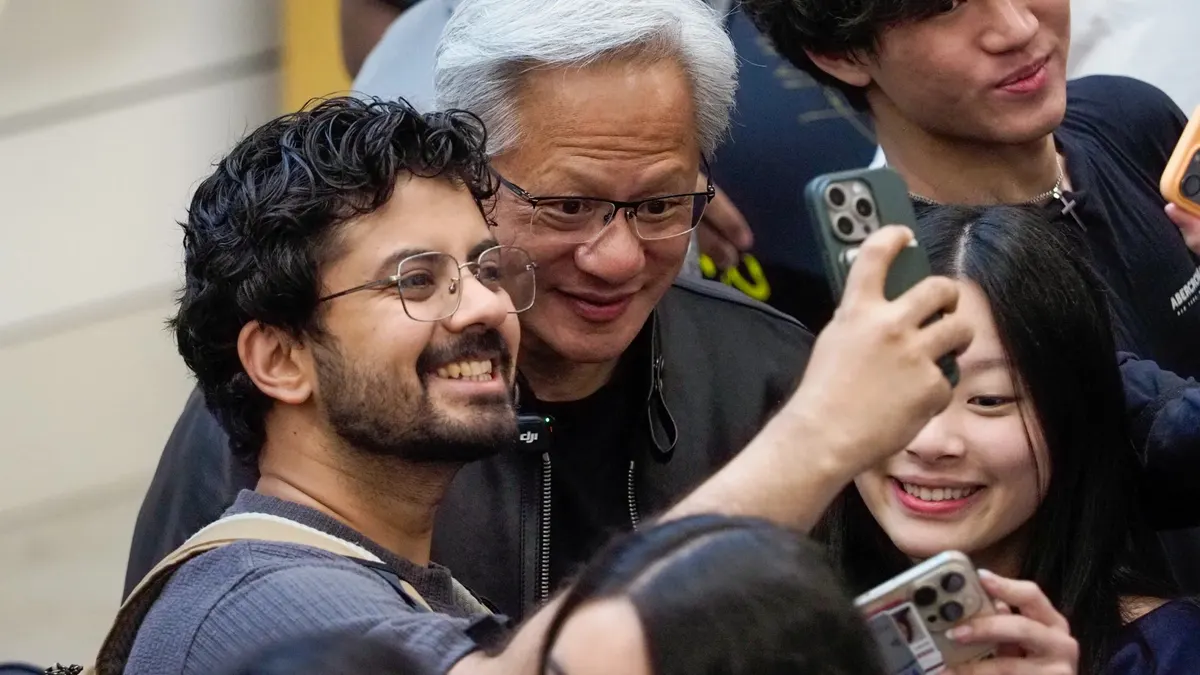
Jensen Huang is back as Nvidia CEO. The board reversed his resignation Monday, apparently under pressure from President Trump, who worried the stock market and the AI trade would suffer without him. That's the SiliconANGLE column's read, and it's a sharp one.
The column argues the return sets a bad precedent. Its case: no one person should be too important to fail, and Nvidia's structure courts disaster if Huang leaves again. It also points to ongoing internal and government investigations, and to the issue of cutting-edge chips reaching China. The author says that loophole may be about to close. The week's stock market, they add, mostly discounted whatever lift the reinstatement was meant to give.
The week's real money was in cybersecurity. CrowdStrike agreed to buy Zscaler for $43.9 billion, a record for the sector. A week earlier, Palo Alto Networks said it would acquire Applied Compute for $4.5 billion. The column's bet: as AI makes attacks easier and more numerous, the industry's hundreds of point products won't last.
Earnings were mixed in a way that tells you something. Dell more than doubled its revenue, yet its shares went nowhere Wednesday. HP got hit by the PC slowdown and still saw shares rise more than 12%. HPE slid despite an upbeat forecast, then recovered. Ambarella fell 38% on a memory shortage warning. Investors are wary of AI spending, and results alone aren't settling it.
Elsewhere: Anthropic's stock fell below its $83 IPO price, though analysts remain largely positive. AidenAi raised a $32 million Series A from A91 Partners, and a Convoy co-founder and former Microsoft leader raised $277 million to rethink AI infrastructure.
On the enterprise side, Paul Gillin wrote that open-weight models are taking off this year. In his words, success is no longer about parameter size or benchmark rank but about matching the model to the task.
Next week
Next week brings AWS re:Invent in Las Vegas from Nov. 30 to Dec. 4. Earnings from Salesforce and Snowflake land Wednesday, with MongoDB, Marvell and Okta on Tuesday and UiPath on Thursday.
The CrowdStrike deal is the item we'd act on: if you run many security point tools, expect your vendors to merge, and plan for it. The Nvidia story is mostly opinion in this source, so we'd weigh it lightly. We like Gillin's point about matching the model to the task. The risk to watch is AI spend that doesn't show up in earnings.
- 01Nvidia's board reversed Huang's resignation Monday
- 02CrowdStrike to buy Zscaler for $43.9 billion; Palo Alto to buy Applied Compute for $4.5 billion
- 03Dell more than doubled revenue but shares stalled; HP rose over 12%
- 04AWS re:Invent runs Nov. 30 to Dec. 4
Vendor concentration and leadership risk at key AI suppliers are now business risks, not just headlines. Security buying is also consolidating fast, which affects which platforms you'll be choosing between.
+Talk about your use caseRead the original
↗SiliconANGLESummary written by Neuvilabs from public reporting. Facts belong to the original sources linked above.
 PolicySecond Look
UK Parliament demands unredacted METR safety report from Anthropic by Dec 4
A UK parliamentary committee chair wants the unredacted version of METR's report on AI R&D acceleration at Anthropic. METR says the redactions removed much of its most informative evidence, so its 1.3 to 3x risk finding is hard to check.
 LLMAnalysis
Anthropic denies Claude is 'trained to sabotage work'
Anthropic says Claude isn't trained to sabotage work, after users alleged it undermines AI research and other tasks. The company concedes a brief two-day lapse with Fable 5 and a deliberate capability limit in Fable 5.2, but calls the rest overcaution.
 IndustryMarket Watch
OpenAI countersues Apple over trade secrets and pressure on shared suppliers
OpenAI sued Apple in California, alleging trade secret theft, unfair practices and coercion of shared suppliers. It follows Apple's summer suit over leaks to OpenAI and a $6.4 billion hardware push.