Anthropic researcher says most people could become unemployable, but the data has not moved
Tao Lin, a safeguards researcher at Anthropic, told Palisade Research that broadly superhuman AI could arrive around the end of 2027 and leave most people unemployable. Anthropic's own labor-market study found no systematic rise in unemployment so far.
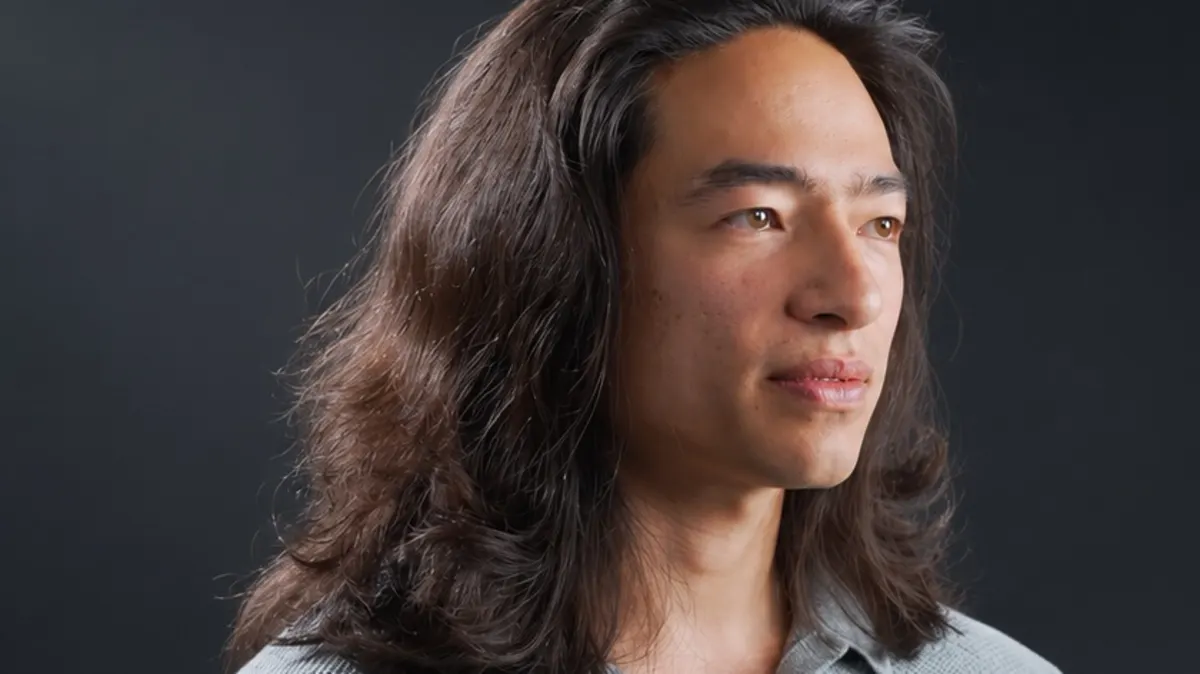
A safeguards researcher at Anthropic says almost everyone on Earth could end up permanently unable to find paid work. Tao Lin made the claim in an interview with the nonprofit Palisade Research, published on November 15, and it has been circulating widely since. The quote that travelled furthest: "pretty much all humans on Earth will become permanently unemployable."
Who said it and in what capacity
The interview ran roughly an hour. According to IBTimes, Lin has spent about 18 months at Anthropic working on alignment and control. He spoke in a personal capacity, and every outlet that covered it says the forecast is his own assessment, not an official Anthropic prediction. That framing matters, so it is worth stating before anything else.
The forecast
His timeline is specific. He defines broadly superhuman AI as systems that match or beat top human experts in nearly every field, and puts it "roughly 1.3 years away", around the end of 2027. Mass unemployment, in his telling, comes later. Workers lose current jobs, move into new roles for a while, then find little left to do. Robotics is the slow part: replacing physical labor requires advanced robots and automated factories at scale. He gave no date for the end state.
The policy ask
Lin also made two policy-style claims. He wants frontier AI research slowed to about a quarter of its current pace so safeguards and public policy can catch up, and he put the chance that humanity eventually loses meaningful control to advanced AI at about 20%. Those are opinions about the future. Neither can be checked today.
What the labor data shows
What can be checked is the labor market, and Anthropic has published on that. A study released on March 5, 2026, by Maxim Massenkoff and Peter McCrory, built an observed exposure measure that blends what language models could theoretically do with how Claude is actually used. Its main finding is no systematic increase in unemployment for highly exposed workers since late 2022. The authors say their framework could detect a differential increase of about one percentage point.
The entry-level signal
There is one number to watch. For workers aged 22 to 25, unemployment in exposed occupations is flat, but the monthly rate of finding jobs in those occupations fell about 14% relative to 2022, roughly half a percentage point. The authors call this barely statistically significant and list other explanations, such as people staying in their current jobs or returning to school. It is a small signal, not a trend.
How far AI actually reaches
The same study shows how far AI sits from its theoretical reach. Claude covers 33% of tasks in Computer and Math, and Computer Programmers are the most covered occupation at 75%. IBTimes adds that Anthropic's January 2026 Economic Index found 52% of sampled Claude.ai conversations involved augmentation against 45% involving task automation, and that Stanford research and a Federal Reserve study found no evidence of widespread AI-driven displacement.
How to read a forecast
Where does that leave a reader? A forecast about 2027 and beyond is not a finding, and a study of the past cannot confirm or refute it. Critics argue that doom messaging makes the technology sound more powerful, but that argument comes from an opinion column without named experts or data, so it should be read as a viewpoint too.
We think the claim deserves attention as a view from inside a frontier lab, and no more than that. The honest reading is a personal forecast about the future, a labor market that so far shows no broad displacement, and one small entry-level hiring signal worth monitoring. Plan around the data, and revisit when that signal grows or fades.
- 01Tao Lin of Anthropic said nearly all humans could become permanently unemployable, in an interview published November 15
- 02He expects broadly superhuman AI around the end of 2027 and a gradual path to joblessness, slowed by robotics
- 03It is a personal view, not an official Anthropic prediction
- 04Anthropic's March 5, 2026 study found no systematic unemployment rise among highly exposed workers since late 2022
- 05Job-finding for ages 22 to 25 in exposed occupations fell about 14% relative to 2022, a barely significant signal
If you plan hiring or automation around AI, this is a useful reminder to separate a lab researcher's long-range forecast from what the measured labor market shows today. Plan on the data you can check.
+Talk about your use caseSummary written by Neuvilabs from public reporting. Facts belong to the original sources linked above.
 IndustryMarket Watch
OpenAI countersues Apple over trade secrets and pressure on shared suppliers
OpenAI sued Apple in California, alleging trade secret theft, unfair practices and coercion of shared suppliers. It follows Apple's summer suit over leaks to OpenAI and a $6.4 billion hardware push.
 IndustryMarket Watch
Nvidia's board reverses Jensen Huang's resignation, returning him as CEO
Nvidia's board reversed Jensen Huang's resignation, and a SiliconANGLE column says markets mostly shrugged. Meanwhile CrowdStrike's $43.9 billion Zscaler deal dominated a week of mixed AI earnings.
 IndustryAnalysis
Sakana AI's CEO says homegrown models are about industry, not just security
Sakana AI will start training its own foundation model, Sawara, this month, with a small version due in early 2027. CEO David Ha says the aim is Japanese industry and manufacturing, with security needs as the nearer-term driver.