Nvidia faces Megaspeed scrutiny and a possible S&P downgrade
Huang's return as CEO hasn't eased the inquiries into Megaspeed and alleged chip smuggling to China. The Justice Department may be backing off, but California, the SEC and Congress aren't.
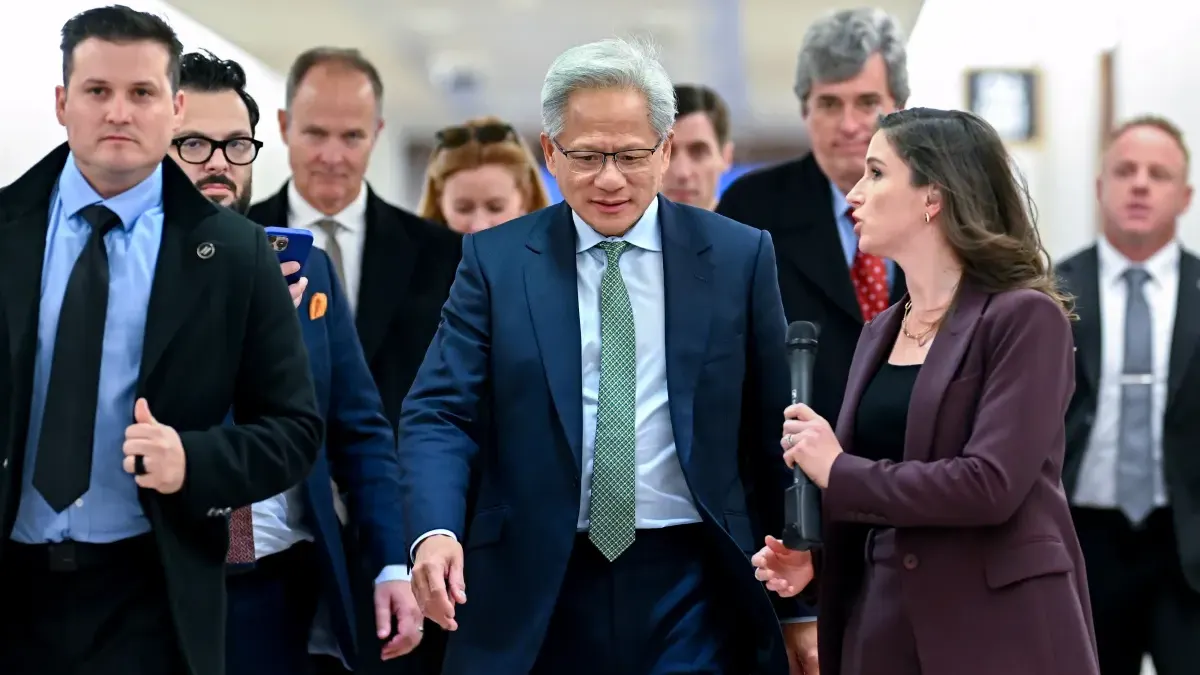
A CEO's return doesn't close the case
Jensen Huang is back as Nvidia's CEO, and the scrutiny hasn't gone anywhere. The company still has to answer several inquiries into claims that its advanced GPUs were smuggled into China by a customer, the Singapore-based data center operator Megaspeed. Such transfers would break U.S. export rules meant to slow China's progress on frontier AI models.
For investigators, the central question is what Nvidia knew about where the chips ended up. A related one is whether Huang's affair with a Megaspeed executive gave the company reason to doubt Megaspeed's assurances. His reinstatement doesn't answer either. The legal picture is also split across several authorities, and they don't agree on how hard to push.
The U.S. government opened its Megaspeed investigation in 2024 and asked Nvidia for information about its billions of dollars in sales to the company. The worry was that some chips bought for data center projects in Malaysia were being diverted to China. Singapore started looking at similar allegations in 2025. Megaspeed has denied wrongdoing.
What the export-control lawyers say
Diversion itself is a familiar problem for a chipmaker. Smugglers and resellers target in-demand chips all the time. Export-control attorneys told TechCrunch that sellers need assurances from end users that they follow the rules. But sellers can't ignore other information that might make those assurances look shaky. That second part is where Nvidia's exposure sits.
This is why the relationship with Alice Huang mattered so much, likely more than her alleged role as a source for Chinese intelligence agencies. If anyone at Nvidia, from junior staff to the CEO, had reason to think Megaspeed's statements weren't reliable, legal risk goes up. Dan Fisher-Owens of Berliner Corcoran & Rowe said investigators would want to know what anyone at Nvidia actually knew about end use and end users, whatever formal assurances were exchanged.
The Wall Street Journal reported that Alice Huang and her husband, Kang Wei, were part of a network of businesses that funneled chips to a company in Shanghai. Kang also reportedly introduced his wife to Jensen Huang, whom he had known for a decade. Nvidia's board feared that Huang knew more about Megaspeed's activities than the compliance statements showed. That fear is why it moved to oust him.
Washington's mixed signals
Washington's response has been mixed. On Monday, the government added Megaspeed and its affiliates to a trade-restriction list over national security concerns. New rules issued last week bar large data centers that buy U.S. chips from serving customers in China and other nations Washington sees as problematic. Nvidia said it would stop selling licensed chips to China, hire its first compliance officer and form a new board committee on export controls. The board said it reinstated Huang Monday after "input from senior levels of the United States government" left it confident he posed no national security risk. President Trump later said he called into the meeting to give that assurance.
Attorney General Todd Blanche called Nvidia "a good corporate citizen" at a Tuesday news conference and suggested it isn't a target. He declined questions on the Megaspeed probe, which the Justice Department said was ongoing as recently as last week. "When you say the export investigation is still ongoing, I don't know what you're talking about," he said. Others may be tougher. California Attorney General Rob Bonta is investigating, and the SEC reportedly is too, both tied to corporate disclosures. Short sellers complained that Nvidia stopped breaking out exports to Singapore in its filings after journalists raised diversion concerns.
Congress and the December hearing
Congress is moving faster. Three House committees will privately interview Huang and top lawyer Tim Teter next week. Teter reportedly intervened in the Commerce Department's Megaspeed investigation last year. Rep. Brian Mast has demanded that Commerce hand over extensive data on its smuggling inquiry. The Senate Banking Committee will question Huang in a public hearing on December 3. Senator Elizabeth Warren wants to know what "input" was given and by whom. A pardon from one office doesn't bind the others, and that's the real risk for Nvidia going into December.
This is a compliance story as much as a Nvidia story. If your AI stack depends on imported GPUs or hosted capacity, we'd want to know your provider's export-control controls in writing. The thing to watch is the December 3 hearing and whether the SEC disclosure questions become a formal action. The risk for customers is supply disruption if rules tighten again.
- 01U.S. investigation into Megaspeed opened in 2024; Singapore began its own in 2025
- 02Megaspeed and affiliates were added to a U.S. trade-restriction list on Monday
- 03Three House committees interview Huang and Tim Teter next week
- 04Senate Banking Committee holds a public hearing with Huang on December 3
Companies buying or reselling AI hardware need documented end-user checks, and they can't ignore warning signs. Export rules can reach the whole chain, including data center customers.
+Talk about your use caseSummary written by Neuvilabs from public reporting. Facts belong to the original sources linked above.
 IndustryMarket Watch
OpenAI countersues Apple over trade secrets and pressure on shared suppliers
OpenAI sued Apple in California, alleging trade secret theft, unfair practices and coercion of shared suppliers. It follows Apple's summer suit over leaks to OpenAI and a $6.4 billion hardware push.
 IndustryMarket Watch
Nvidia's board reverses Jensen Huang's resignation, returning him as CEO
Nvidia's board reversed Jensen Huang's resignation, and a SiliconANGLE column says markets mostly shrugged. Meanwhile CrowdStrike's $43.9 billion Zscaler deal dominated a week of mixed AI earnings.
 IndustryAnalysis
Sakana AI's CEO says homegrown models are about industry, not just security
Sakana AI will start training its own foundation model, Sawara, this month, with a small version due in early 2027. CEO David Ha says the aim is Japanese industry and manufacturing, with security needs as the nearer-term driver.