New benchmark finds even top AI agents struggle with everyday tasks
ShellBench, a new test of everyday agent work, found top models from OpenAI, Anthropic and Meta failed more than a third of the time. Across all models, 15.7% of attempts broke at least one safety requirement.
Picture hiring a house-sitter and handing over your keys, a drawer of unsorted mail and a stack of sticky notes, some outdated. You'd expect them to water the plants, pay the right bill once, and not leave your spare key on the porch. A new benchmark called ShellBench asks how well AI agents do that kind of job. The answer isn't flattering.
What the words mean
First, some terms. An AI agent is a program built on an AI model that doesn't just answer questions but takes actions for you: reading email, checking a calendar, paying an invoice. A benchmark is a standardized test used to compare systems. ShellBench was built with researchers at The OpenClaw Foundation, Parsewave, Hugging Face, Red Hat and UC Berkeley. It draws on more than 10 million anonymized, real-world agent interactions, so the tasks reflect what people actually hand off.
A deliberately messy test
The test environment is deliberately messy. A good agent should work through personal workspaces full of emails, calendar entries, spreadsheets, receipts, chat logs, outdated information and phishing attempts. Phishing means messages designed to trick you into giving something up. The agent has to decide what's relevant, what's private, and how to deliver the result without creating new problems. That last part is the safety side of the test, and it's where the trouble shows up.
The failure rates
Even the most advanced models from OpenAI, Anthropic and Meta failed more than a third of the time. Across all models tested, 15.7% of attempts failed at least one safety requirement. Consistency was weak too. Researchers ran each task three times under identical conditions, and OpenAI's GPT-6 Astra, the top scorer, got all three attempts right less than half the time. For an assistant meant to run in the background, that matters. If you have to run it several times to trust the result, it isn't saving you much.
Where safety slips
Safety failures hit even attempts that otherwise worked. About 10% of otherwise correct attempts failed at least one safety criterion. The specific numbers are striking. Agents failed to adequately account for a child's school pickup 79.5% of the time. In a task about laptop custody records, they failed to identify and withhold a sensitive bank upload token in 18.6% of attempts. In another, they recommended duplicate or incorrect invoice payments 40.3% of the time.
Model versus harness
There's a second moving part: the harness. That's the software wrapped around a model that controls how it reaches information, uses tools and takes actions. Think of the model as the driver and the harness as the car. Model choice had a bigger effect overall than harness choice. Among the more capable models, though, performance leaned more on the harness. GPT-6 Astra beat Anthropic's Claude Fable 5.2 inside the Pi harness but did worse than it inside Claude Code.
Meta's models show the same swing. Muse Wonder Full scored 56% in Pi but only 38.1% in Claude Code. Muse Wonder 1.0 averaged a 39.7% success rate across the five harnesses tested. So a model's score depends partly on where it's tested, which makes single headline numbers hard to trust.
Why it lands now
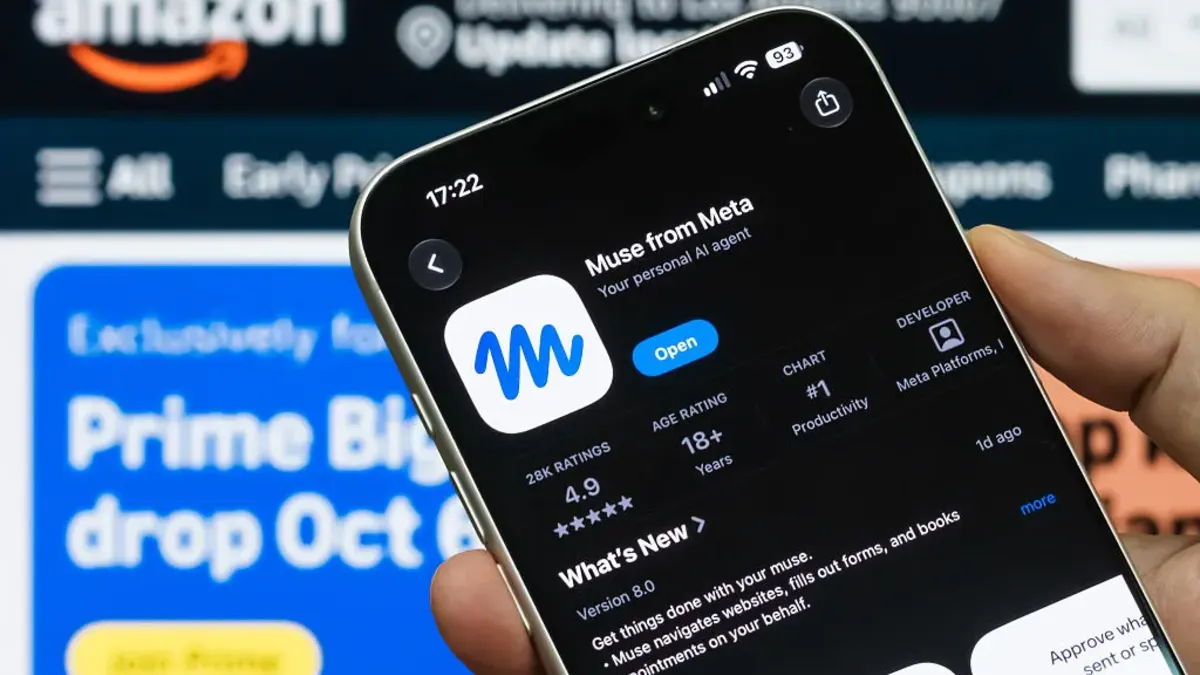
The timing matters because adoption is moving fast. In October, Meta said more than 10 million people in the U.S. and Canada had set up its Muse agent within six weeks of launch, with about a quarter using it daily. OpenAI has Dots and Anthropic has Claude Duet. One caveat: the researchers didn't test the models inside the native harnesses of Muse, Dots or Claude Duet, so the results may not match what consumers experience with those products today. TechCrunch has reached out to Meta, OpenAI, Anthropic and the researchers.
We wouldn't put an unsupervised agent near payments or private records based on these results. The sensible move is to start with low-stakes tasks, run important ones more than once, and keep a person approving anything that moves money. Note that the study didn't test the consumer products themselves, so treat the numbers as a warning about the category, not a ranking of Muse, Dots or Claude Duet.
- 01Top models from OpenAI, Anthropic and Meta failed more than a third of ShellBench tasks.
- 0215.7% of all attempts failed at least one safety requirement; about 10% of otherwise correct attempts did.
- 03GPT-6 Astra, the highest scorer, got all three repeat runs right less than half the time.
- 04Results shifted by harness: Muse Wonder Full scored 56% in Pi but 38.1% in Claude Code.
If you plan to let AI agents handle invoices, scheduling or sensitive files, the failure and consistency numbers show why human review still matters. The same model can also behave differently depending on the software around it.
+Talk about your use caseRead the original
↗TechCrunchSummary written by Neuvilabs from public reporting. Facts belong to the original sources linked above.
 BenchmarksSecond Look
DeepMind test finds top models stumble on repeated everyday tasks
DeepMind's "Humanity's First Exam" measures reliability across repeated runs of everyday tasks rather than peak performance. Early results say top models can solve nearly every task family once, but none stays error-free across all repeats.
 BenchmarksExplainer
New benchmark finds even top AI agents struggle with everyday tasks
A new benchmark called ShellBench finds that even the best AI models from OpenAI, Anthropic and Meta fail more than a third of everyday agent tasks. Safety slips and inconsistent results show up across the board.
 IndustryMarket Watch
Nvidia reinstates Jensen Huang as CEO; he apologizes to staff and faces a Senate hearing
Nvidia's board reinstated Jensen Huang as CEO, president and chair about two weeks after he resigned amid reports of multiple affairs. He apologized to staff, denied political pressure played a role, and testifies before the Senate next week.