Sakana AI releases Namazu Small, a 30B reasoning model on Nemotron 3 Nano
Sakana AI has released Namazu Small, a 30B reasoning model built on NVIDIA's Nemotron 3 Nano that uses only 3B parameters at a time. It scores 60.1 on a 25-benchmark average, ahead of the 120B Super, but lags on answering from memory.
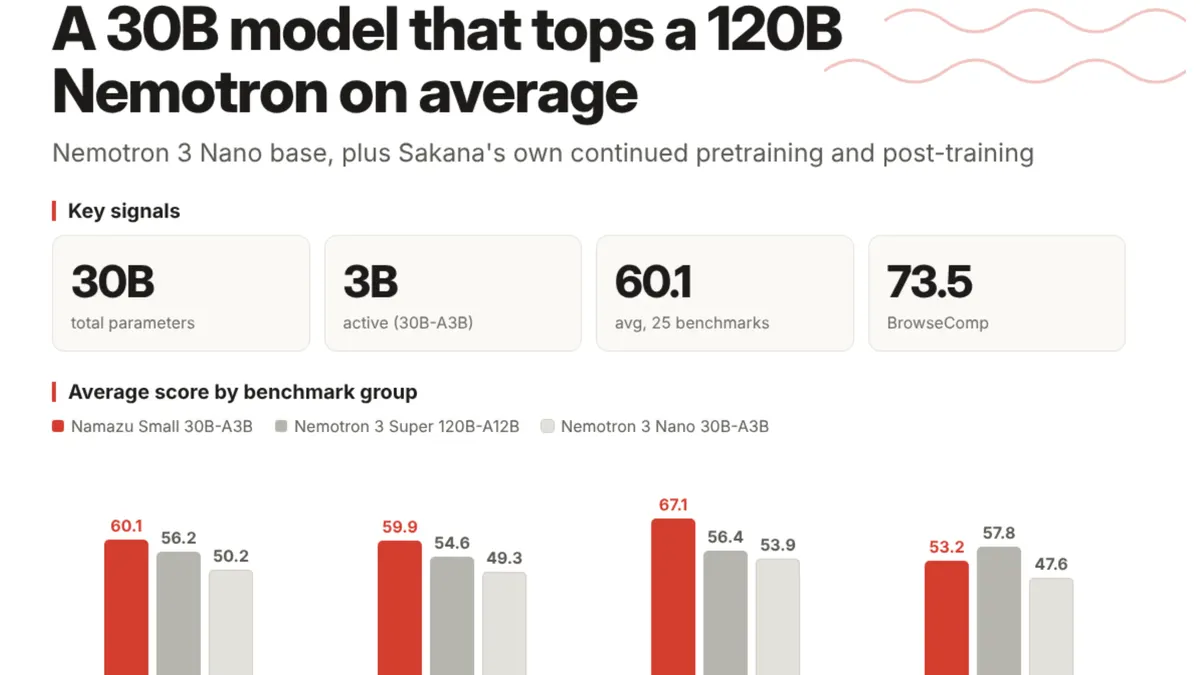
Sakana AI, a lab based in Japan, has released Sakana Namazu Small, a reasoning model with 30 billion parameters. It's built on NVIDIA's Nemotron 3 Nano, and Sakana says it beats NVIDIA's much larger 120B Nemotron 3 Super on an average of 25 benchmarks. Here's what that means, and what it doesn't.
Jargon first
Start with the jargon. A parameter is one of the adjustable numbers inside a model, and more of them usually means more capacity. Namazu Small is labeled 30B-A3B: 30 billion in total, but only 3 billion active at a time. That works because the model is a mixture-of-experts design, where the system routes each piece of text to a few specialist sections instead of using the whole network every time. You get a big model's knowledge at something closer to a small model's running cost.
What it's for
A reasoning model is one that works step by step. Sakana says it organizes the information it needs and reasons toward an answer. The company aims it at three kinds of work: everyday conversation, research with web search, and reading long documents. It's the compact member of the Namazu family. The larger Sakana Namazu is based on Kimi K2.6.
How it was trained
The training story has two parts. Sakana started from the pretrained base of Nemotron 3 Nano, not NVIDIA's finished release. Pretraining is the first, broad learning phase. Sakana then ran continued pretraining, more of that phase, followed by post-training, the later polishing that teaches a model to follow instructions and reason. All of it happened in-house, using techniques that build on those Sakana developed for the original Namazu.
The scores
Now the scores. Sakana reports a 60.1 average across 25 benchmarks, against 56.2 for Nemotron 3 Super and 50.2 for Nano. A benchmark is simply a standardized test, and an average blends many of them. One caveat matters: every number here comes from Sakana itself, not an independent party.
Where it wins
The wins are concentrated in web research and long documents. On BrowseComp, Namazu Small scores 73.5, roughly double Super's 36.1. On DeepSearchQA it reaches 84.3 versus 65.4 for Super. On LLM-jp LongBench it hits 86.0, up from 67.0 for the Nano baseline, and FaithEval comes in at 78.3 versus 59.1 for Super.
Where it falls short
The weak spot is recall from memory. Think of an open-book exam versus a closed-book one. Namazu Small does well when it can look things up or read the text in front of it. When it has to answer from what it already knows, it stumbles. SimpleQA Verified is 6.8, below Nano's 9.1 and Super's 18.1. Japanese SimpleQA is 8.0 against 24.9 for Super, and HealthBench falls to 40.6 from Nano's 47.5. Sakana itself says tasks relying only on internal knowledge didn't improve much.
The mixed picture
So the picture is mixed. Namazu Small beats Super on 13 of 25 tests and Nano on 22 of 25. That's a real result, but it isn't a clean sweep. Sakana hasn't disclosed the model's context length, meaning how much text it can read at once, or the hardware it needs. It only says it's small enough to run in your own environment. The Nano base was designed for DGX Spark, H100 and B200 GPUs and supports context up to 1M tokens.
We'd test Namazu Small for research and document-QA tasks where answers can be checked against sources, since that's where Sakana's numbers are strongest. All scores are self-reported, so we'd rerun them on our own data before trusting them. Anyone expecting it to answer factual questions from memory should look elsewhere, and the undisclosed hardware needs are worth confirming before planning a deployment.
- 0130B total parameters, 3B active, built on Nemotron 3 Nano
- 0260.1 average on 25 benchmarks versus 56.2 for Nemotron 3 Super (self-reported)
- 03BrowseComp 73.5, about double Super's 36.1
- 04SimpleQA Verified only 6.8, below both Nemotron models; context length not disclosed
A small model that can run in your own environment and is strong at web research and document questions could suit private research workflows. Weak closed-book recall means it needs search or source documents to be reliable.
+Talk about your use caseRead the original
↗MarkTechPostSummary written by Neuvilabs from public reporting. Facts belong to the original sources linked above.
 ModelsSecond Look
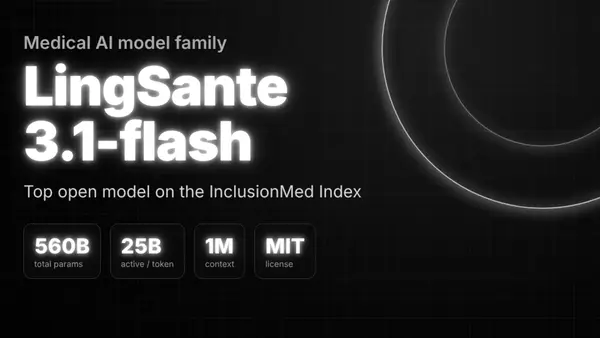
Ant Group open-sources 560B-parameter medical model LingSante-3.1-flash
Ant Group released LingSante-3.1-flash, a 560B-parameter open medical model under the MIT license. Its top-open-model claim holds on one new index, but it's 5th overall and trails on several medical benchmarks.
 PolicySecond Look
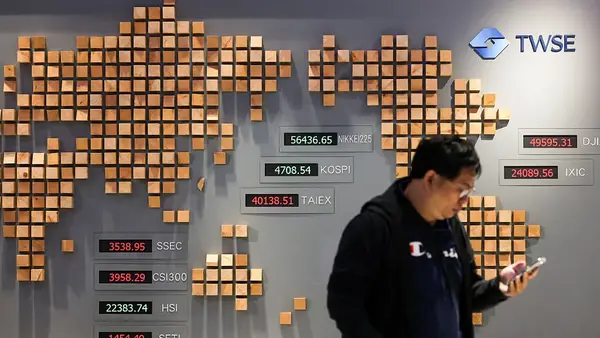
Nvidia pauses server shipments to Southeast Asia as US tightens chip curbs
Nvidia has reportedly told Dell, Super Micro and other partners to pause server shipments to Malaysia, Singapore, Thailand and Indonesia while it checks export compliance. The reasons are plausible, but the report offers no evidence of violations and no end date.
 IndustryMarket Watch
OpenAI countersues Apple over trade secrets and pressure on suppliers
OpenAI has countersued Apple in California, alleging trade secret theft and coercion of shared suppliers. It follows Apple's own summer lawsuit over leaks and comes as OpenAI prepares devices to compete with the iPhone.