OpenAI and Cisco release Shirudo, an open-source runtime for AI-driven live system defense
OpenAI and Cisco released Shirudo, an open-source Linux runtime that lets AI agents write temporary eBPF shields against known exploits. A Codex-built shield blocked Java4Shell on a running Elasticsearch node, and the code is pre-release.
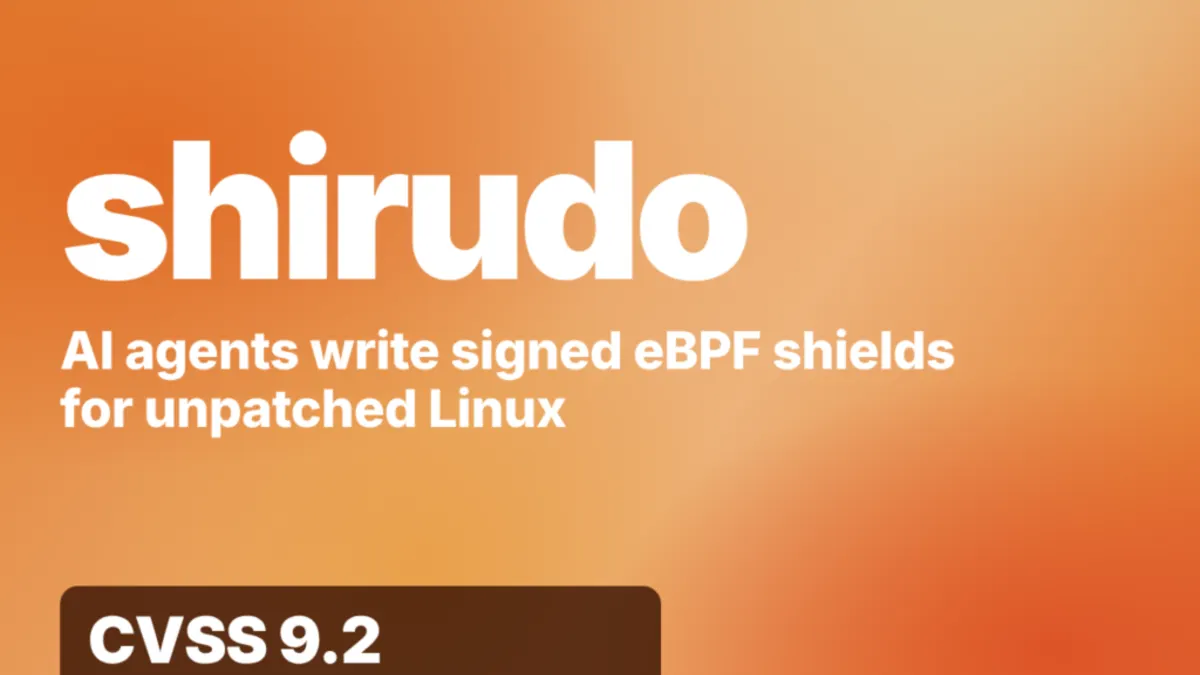
OpenAI and Cisco have released Shirudo, an open-source Linux runtime for defending live systems. It uses eBPF, which runs small verified programs at hooks inside the Linux kernel. AI agents write temporary 'shields' against known exploits. A shield blocks the vulnerable behavior while legitimate requests keep flowing. Teams get time to test and ship the real patch. Isovalent at Cisco, the team behind Cilium and Tetragon, did the engineering. The name is Japanese for 'shield.' The code is pre-release. Shirudo is a software runtime, not a model.
The design has two roles. The operator machine runs a one-shot CLI, not a daemon. It builds and signs shields and pushes them to an OCI registry. Signing code never reaches a target. The target node has no persistent Shirudo daemon. Its control plane is an eBPF program loaded at boot. It pulls packages and verifies signatures before loading them. A shield can block the code path a bug needs, replace vulnerable code, or add detection visibility. The docs call these packages upatches: small BPF C programs shipped as signed artifacts. There is no policy DSL. Operators approve shields before enforcement, and teams can watch a shield's impact before it blocks anything.
Isovalent describes four stages, with Codex as the control plane. Discovery finds bugs or ingests external disclosures. Mitigation builds an exploit reproducer, picks a hook and iterates until the shield works. Rollout pushes signed shields, monitored against a security score and app health. Monitoring tracks a hit count of exploitation attempts. On trust, the kernel checks each loader's signature against a .bpf keyring. The eBPF verifier then checks program safety. A TPM 2.0 records every load and unload and signs attestation evidence. The test bundle uses an ML-DSA-87 signing key. Registry traffic uses TLS 1.3 with hybrid post-quantum key exchange.
One test is disclosed. Java4Shell (CVE-2026-114938) is a heap corruption bug in OpenJDK's Base64 decoder. It scores 9.2 on CVSS 4.0 and affects OpenJDK 17.0.6 and newer on x86-64 CPUs with AVX-512 VBMI. Calif.io found it on October 24 using Codex. Oracle shipped a fix on November 17. Codex generated a guard on java.util.Base64$Decoder.decode0 and attached it to a running Elasticsearch 9.5.5 node. The exploit input was rejected and the service stayed up, with no restart. No false-positive rate or overhead figure was published. The Isovalent post says this specific shield was Java bytecode. The Java agent docs call such upatches an in-application mitigation, not a kernel boundary, and describe startup-time loading only. The demo attached at runtime.
Requirements are strict. Targets need a bpf-next kernel with the signed-loader ABI. The test kernel reports 7.4.0-rc1-bpf-next+. Five carried kernel patches are needed, and none are in bpf-next yet. Targets also need TPM 2.0, systemd 256 or newer, and a unified kernel image. The operator needs clang and LLVM 23 and OpenSSL 3.5 or newer. Supported architectures are x86-64, arm64 and riscv64. The quickstart VM example uses 4 CPUs and 4G RAM. There is no fallback for older kernels and no TPM-less mode. Developers can try the VM quickstart or the Isovalent lab.
The idea is sound: a signed, reviewable mitigation that buys time is easier to accept than an agent changing production freely. We'd try it in a lab, but we wouldn't plan production use yet. One disclosed test, no overhead numbers and a patched-kernel requirement are real limits. Watch for published false-positive data and for the carried patches landing in bpf-next.
- 01Open-source Linux runtime; AI agents write signed eBPF shields; code is pre-release
- 02A Codex-generated shield blocked Java4Shell (CVSS 9.2) on running Elasticsearch 9.5.5
- 03Needs a bpf-next kernel with 5 carried patches and TPM 2.0; no TPM-less mode
- 04No overhead or false-positive figures published
Patching can take days or weeks, and this approach targets that gap on live systems. The strict kernel and hardware requirements limit who can try it today.
+Talk about your use caseSummary written by Neuvilabs from public reporting. Facts belong to the original sources linked above.
 ToolsBuilder's Notes
OpenAI is building 'Athena' to make data agents more accurate
OpenAI is reportedly building a data platform called "Athena" that works like a semantic layer, giving its agents consistent business metric definitions. It's early, with no timeline or pricing announced.
 ToolsBuilder's Notes
OpenAI is building "Athena" to make data agents more accurate
OpenAI is building a data platform called Athena that works like a semantic layer, giving AI agents consistent definitions for business metrics. It's early, with no timeline or pricing announced.
 ToolsThe Brief
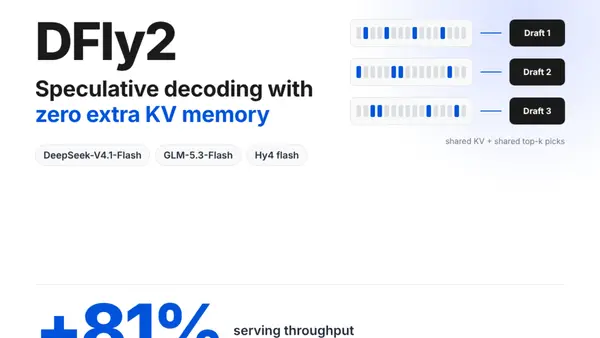
Tencent open-sources DFly2 to speed up sparse-attention LLM serving
Tencent has open-sourced DFly2, a speculative decoding drafter that reuses a sparse target model's KV cache and indexer picks. Tencent reports up to 81% more throughput on DeepSeek-V4.1-Flash at 64K context.