Anthropic launches Claude Ship to let AI agents review, fix and approve pull requests
Anthropic launched Claude Ship, a suite of AI agents that review, fix and approve pull requests. Approvals follow policies a team writes in natural language and stores in its repository.
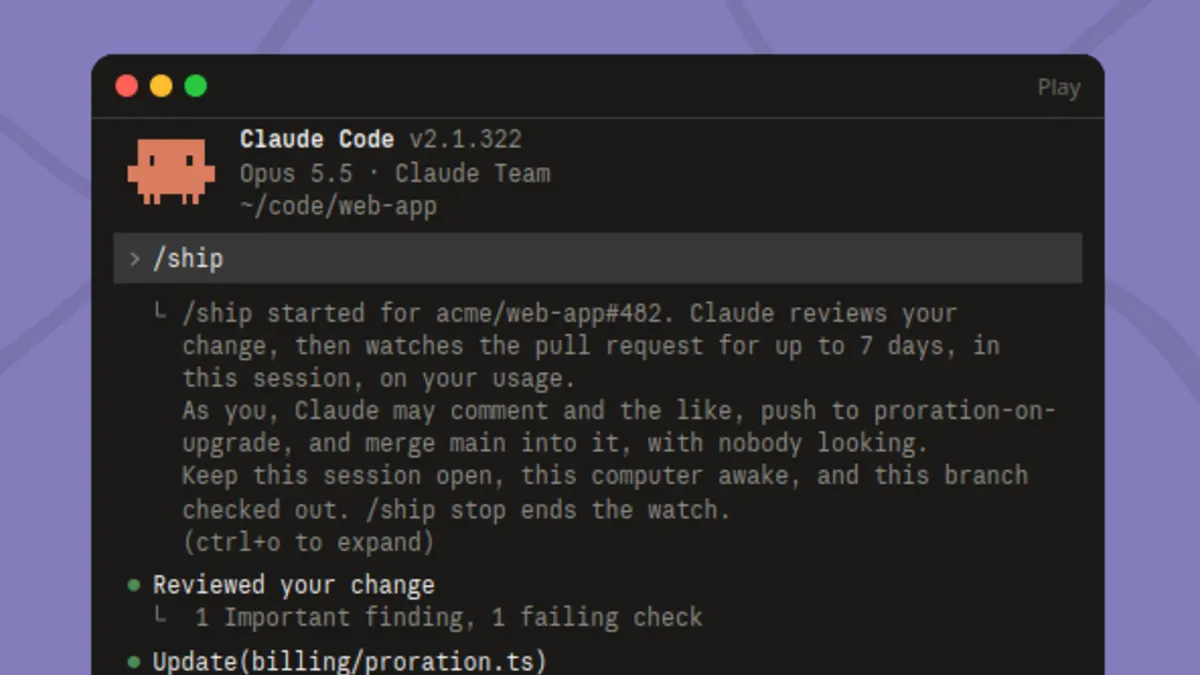
Anthropic has launched Claude Ship, a suite of AI agents that automate code reviews, bug fixes and approvals for pull requests. The company announced the product in an update today. Claude can now tell developers when code it wrote is ready to go into production. The launch extends Anthropic's tools from writing software to the last stage of the development pipeline. AI tools for reviews and fixes already exist. Automatic approval is the part SiliconANGLE describes as new, because it runs on policies that an organization's developer team sets in advance.
Anthropic says the product targets a bottleneck. Companies that use AI code generation produce fresh code quickly. AI agents check that code and suggest fixes when it fails. Until now, humans have handled the final review and approval. Claude Ship lets developers hand that final authority to Claude. Their remaining job is to set the quality and security standards for the code they ask AI to produce. In a blog post, Anthropic said most teams want a person to approve every change, and that this works when people write every line. It added that many developers now build with agents. On the Claude Code team, it said, Claude writes most of the code, and the team wanted everything after the pull request to move at the same pace.
Claude Ship has three parts. Code Review is the first. It has been generally available for some time. PR Steward and Claude Approvals are the other two, and both are in beta. PR Steward handles failing continuous integration checks, merge conflicts and feedback from Code Review. After each push, it leaves comments that describe what changed and how to roll the changes back if needed. Together, the three parts cover the stretch from an open pull request to a final approval.
Claude Approvals starts once PR Steward finishes. It applies an approval policy stored as a file in the code repository. The policy is written in natural language. The approval process can draw on findings from Code Review and on an organization's own classifiers.
Anthropic urges early adopters to be cautious. Because Claude Ship is in beta, the company recommends running Claude Approvals in observe-only mode first. It advises teams to start with one repository and to set monthly spending limits. The recommendations are meant to give teams more control over the rollout. Claude Ship is available to Claude Team and Enterprise subscribers. It works with repositories on GitHub.
Automated approval is the piece to watch, and Anthropic's own advice is the right starting point: observe-only mode, one repository, a spending cap. We'd treat the policy file as the real product, since a vague policy means vague approvals. Teams in regulated or security-sensitive work should wait for the beta to settle before letting an agent sign off on anything.
- 01Claude Ship combines Code Review, PR Steward and Claude Approvals
- 02PR Steward and Claude Approvals are in beta; Code Review is generally available
- 03Approval policies are natural-language files stored in the repository
- 04Available to Claude Team and Enterprise subscribers with GitHub repositories
If your team already generates code with AI, human approval may be the slowest step left. Claude Ship is a first look at how that step could be handed to policy-driven agents.
+Talk about your use caseSummary written by Neuvilabs from public reporting. Facts belong to the original sources linked above.
 ToolsBuilder's Notes
OpenAI is building 'Athena' to make data agents more accurate
OpenAI is reportedly building a data platform called "Athena" that works like a semantic layer, giving its agents consistent business metric definitions. It's early, with no timeline or pricing announced.
 ToolsBuilder's Notes
OpenAI is building "Athena" to make data agents more accurate
OpenAI is building a data platform called Athena that works like a semantic layer, giving AI agents consistent definitions for business metrics. It's early, with no timeline or pricing announced.
 ToolsThe Brief
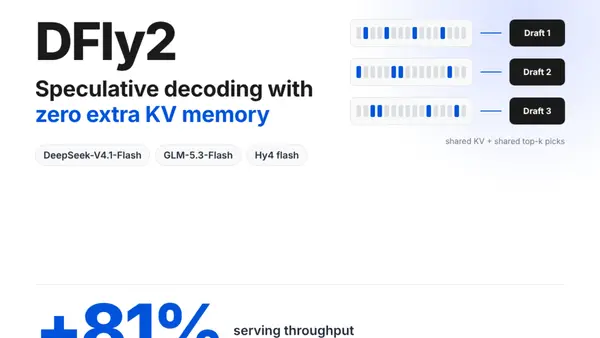
Tencent open-sources DFly2 to speed up sparse-attention LLM serving
Tencent has open-sourced DFly2, a speculative decoding drafter that reuses a sparse target model's KV cache and indexer picks. Tencent reports up to 81% more throughput on DeepSeek-V4.1-Flash at 64K context.