Terence Tao envisions 'Big Math' with AI, criticizes opaque tech-firm proofs
Terence Tao says AI will push mathematics toward larger collaborations he calls "Big Math." He also calls tech firms' unexplained AI proofs "toxic waste."
What Big Math means
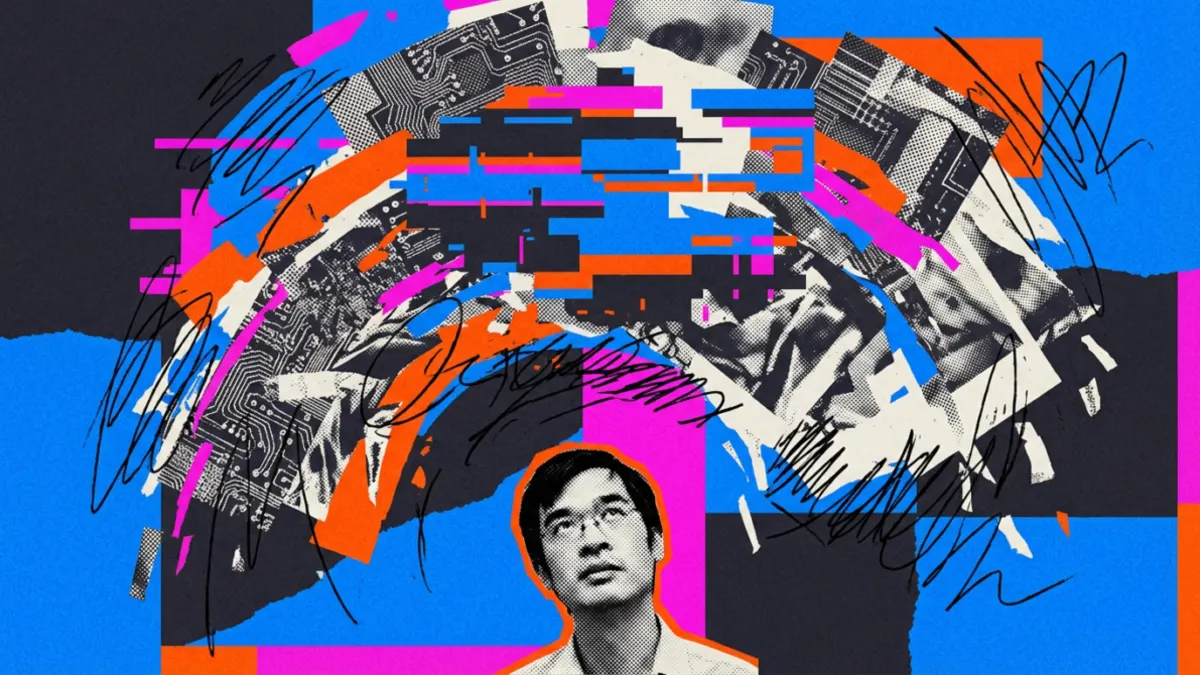
Mathematician Terence Tao expects AI to change how his field is organized. On the Hard Fork podcast, he called the result "Big Math," a nod to the decades-old "Big Science" model of research. The idea is that mathematicians will work in ever larger groups.
Who leads
One effect is who gets to lead. Tao says even postdocs and PhD students could run ambitious projects, because AI speeds up entry into complex topics. A postdoc is a researcher in the early years after a doctorate. Getting up to speed on a hard subject used to be a barrier, and AI shortens that climb.
Mapping, not climbing
The second effect is scope. Human-AI teams could systematically map thousands of problems instead of solving them one at a time. Picture surveying an entire coastline rather than climbing a single peak. You'd learn the shape of the whole thing, including which stretches are easy and which are brutal. Tao described a similar "industrialization of mathematics" in 2024.
None of this makes him a cheerleader for tech companies. He sharply criticizes the AI results coming from major firms. The models solve open problems, meaning questions nobody had answered, and they contribute technically. But they produce answers without understanding, he says, and can't explain their proofs.
The toxic waste charge
That's why he calls such proofs "toxic waste." In his view, they're an unwanted byproduct of training better models, something the companies must dump after minimal cleanup. It's a blunt phrase from a mathematician with a lot of standing. In October, Tao and other mathematicians called for an OpenAI boycott.
Journals under pressure
He's equally unimpressed by AI-generated papers flooding academic journals. They sometimes solve open problems, he says, but often fail to open new research directions. They cite sloppily, explain poorly, and aren't enjoyable to read. A correct result that nobody can follow isn't much use to a field built on shared understanding.
The first awful solution
Still, Tao sees a role for AI. He hopes it will deliver the "first awful solution." Humans would then structure it properly and put it into clear context. Think of a rough draft handed to a good editor. The machine supplies the raw material, and people supply the meaning.
Tao's "first awful solution" idea matches how we'd advise clients to use AI: treat output as a draft that people structure and verify. The risk is volume, since cheap AI output can bury the people who have to check it. Teams adopting AI should budget for review time, not just generation.
- 01Tao predicts "Big Math," with larger groups and younger researchers leading projects
- 02Human-AI teams could map thousands of problems systematically
- 03He calls unexplained proofs from major tech firms "toxic waste"
- 04He criticizes AI-generated papers for weak citations and poor explanation
Tao's critique applies beyond math: AI output that can't be explained is hard to trust or build on. Businesses using AI for analysis or code should expect to add human review and context.
+Talk about your use caseRead the original
↗The DecoderSummary written by Neuvilabs from public reporting. Facts belong to the original sources linked above.
 PolicySecond Look
UK Parliament demands unredacted METR safety report from Anthropic by Dec 4
A UK parliamentary committee chair wants the unredacted version of METR's report on AI R&D acceleration at Anthropic. METR says the redactions removed much of its most informative evidence, so its 1.3 to 3x risk finding is hard to check.
 LLMAnalysis
Anthropic denies Claude is 'trained to sabotage work'
Anthropic says Claude isn't trained to sabotage work, after users alleged it undermines AI research and other tasks. The company concedes a brief two-day lapse with Fable 5 and a deliberate capability limit in Fable 5.2, but calls the rest overcaution.
 IndustryMarket Watch
OpenAI countersues Apple over trade secrets and pressure on shared suppliers
OpenAI sued Apple in California, alleging trade secret theft, unfair practices and coercion of shared suppliers. It follows Apple's summer suit over leaks to OpenAI and a $6.4 billion hardware push.